Author name: Valerie

Rugby

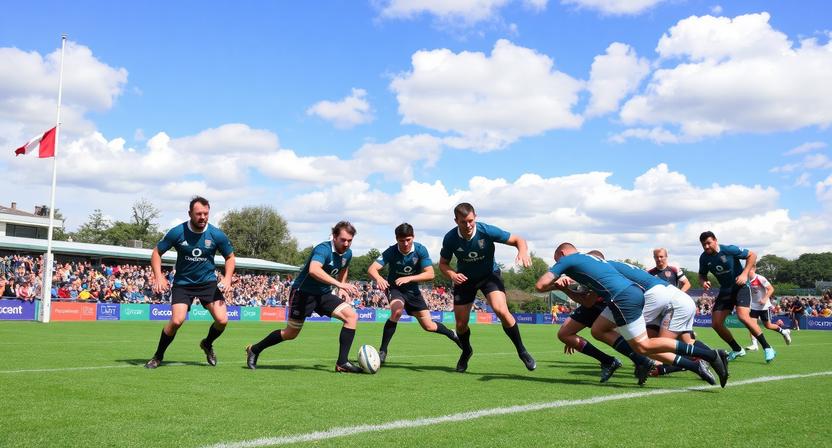
Rugby Europe Super Cup Title Decided in Championship Final Showdown

The 2025/26 Rugby Europe Super Cup reached its climax on Sunday, January 25, 2026, as the competition’s two best-performing clubs met in the championship final to decide the season’s title winner. Staged as the ultimate knockout fixture, the final carried the highest stakes of the tournament, with the victorious side crowned Rugby Europe Super Cup champions following months of cross-border competition, while the defeated finalists were left to reflect on a campaign that fell just short of the ultimate prize.

Polo

Ylvisaker Cup Delivers Competitive Polo Showcase on Winter Calendar

The Ylvisaker Cup was contested on January 24, 2026, as part of the mid-winter polo schedule, bringing together competitive sides for a one-day championship fixture that emphasized balance, discipline, and execution under pressure. Played within the framework of the UAE’s active polo season, the event served as both a standalone trophy contest and a meaningful benchmark for teams preparing for larger high-goal tournaments later in the calendar.

Polo

Al Habtoor Polo Team Claim Dubai Silver Cup After Defeating UAE Polo Team in Final

The Al Habtoor Polo Team were crowned champions of the 16th edition of the Dubai Silver Cup on January 24, 2026, after securing a 9–7 victory over the UAE Polo Team in the final at Al Habtoor Polo Resort and Club. Staged from January 10 to 24, the tournament marked the official start of the UAE high-goal polo season and reaffirmed its status as one of the region’s premier 20-goal handicap competitions.

Pickleball

Knockout Rounds Raise Intensity as IPF Tournament Enters Elimination Phase

Thursday–Saturday, 22–24 January 2026 — International Pickleball Federation (IPF), Knockout Rounds The International Pickleball Federation tournament moved into its most unforgiving phase from January 22 to 24, 2026, as the knockout rounds commenced across Wave 2 events in singles and doubles categories. With the draw narrowed and margins for error eliminated, players faced a win-or-exit scenario that tested technical precision, physical endurance, and mental resilience over three decisive days of competition. Elimination Format Sharpens Competitive Edge The knockout rounds followed the completion of Wave 2 opening matches, bringing together qualifiers from the main draws into straight elimination brackets. Unlike earlier stages, where recovery and adjustment were possible, the January 22–24 window demanded immediate execution. One loss meant elimination, intensifying every rally and heightening the strategic value of serves, returns, and net control. Singles matches during the knockout phase were marked by longer, more deliberate exchanges. Players prioritized court positioning and error reduction, aware that momentum swings can be abrupt in elimination play. Doubles contests, by contrast, accelerated in tempo, with partnerships relying heavily on anticipation and communication at the non-volley zone to gain quick advantages. A tournament official observed that knockout rounds “separate preparation from potential,” noting that consistency under pressure often outweighs raw athleticism at this stage. Pressure Reveals Composure and Experience As the brackets progressed, experience became a defining factor. Players and teams accustomed to late-stage international competition demonstrated an ability to manage nerves and reset quickly after lost points. Several matches hinged on narrow margins, with decisive moments arriving late in games when fatigue and tension peaked. Those advancing frequently cited emotional control as the difference. One doubles competitor remarked that “you can’t chase points in knockouts—you have to let the game come to you,” underscoring the shift in mindset required once elimination begins. At the same time, the knockout rounds provided opportunities for emerging players to test themselves against established opposition. While not all newcomers advanced, competitive performances highlighted the growing depth of the international field. Context Within the IPF Competitive Structure Within the IPF framework, knockout rounds represent the transition from broad participation to medal contention. Results during this phase carry significant ranking implications and often determine which players gain visibility heading into later-season events. January knockouts are particularly influential, as early-season outcomes help shape seedings for continental championships and world-level tournaments. Historically, players who navigate January elimination rounds successfully tend to carry confidence and form into subsequent competitions. The Wave-based structure also played a role in competitive balance. With Wave 2 events reaching elimination stages, some players benefited from fresher legs, while others relied on experience to manage accumulated workload. Tactical Themes Across Singles and Doubles Several tactical patterns emerged during the January 22–24 knockouts. In singles, depth and placement proved more effective than pace, with players using cross-court control to force errors. In doubles, teams that dominated the non-volley zone and limited unforced mistakes consistently advanced. Serve consistency and return accuracy were repeatedly highlighted by coaches as decisive elements. In an elimination context, conceding early leads often placed players under immediate psychological pressure, making strong starts particularly valuable. Implications for Players and Federations For players advancing through the knockout rounds, progression brought both tangible rewards and heightened expectations. Reaching the later stages validated preparation and adaptability, while also increasing visibility within the international circuit. National federations closely monitored performances during this phase, using knockout results as indicators of competitive readiness under pressure. Even for those eliminated, close contests provided data for refinement ahead of future IPF-sanctioned events. Looking Ahead to the Final Stages As the knockout rounds concluded on January 24, the tournament field narrowed further, setting the stage for final classification matches and championship deciders still to come. With only the most composed competitors remaining, the focus now shifts to converting survival into success. The January 22–24 elimination phase reinforced the essence of international pickleball at the highest level: precision over power, composure over urgency, and the ability to perform when the margin for error disappears entirely.

Rugby

Bronze Final Offers Redemption and Podium Pride in Classification Decider

The Bronze Final held on Saturday, January 24, 2026, brought together the two clubs that had fallen short in the semi-finals, with third place in the competition at stake. Played as a classification match rather than a title contest, the fixture determined the final podium position and offered both teams an opportunity to conclude their campaigns on a positive note. While the championship spotlight lay elsewhere, the match carried significance for squad depth, player development, and institutional pride.

Skateboarding

Skateboarding With Strangers Brings Community-Driven Competition to London

Skateboarding With Strangers returned to London on January 24, 2026, delivering a one-day skateboarding event that blended competitive structure with an open, community-first ethos. Staged during the UK’s winter skate season, the London edition brought together riders of varied backgrounds and experience levels, emphasizing creativity, adaptability, and shared space rather than rigid hierarchy.

Pickleball

Wave 2 Competition Gets Underway as New Events Begin at IPF Tournament

The International Pickleball Federation tournament entered a new chapter from January 19 to 21, 2026, as Wave 2 events officially began, expanding the competition with fresh singles and doubles categories. Following the conclusion of the Wave 1 finals, the focus shifted to a new group of players and pairings, many of whom were entering the tournament for the first time, bringing renewed energy and competitive depth to the international stage.

Rugby

Champions Cup Knockout Field Set as Qualification Is Confirmed and Draw Conducted

The knockout picture for the 2025/26 EPCR Champions Cup became official on January 19 and 20, 2026, as qualification from the pool stage was confirmed and the draw for the next round of the tournament was completed. Following the conclusion of Pool Stage Round 4 over the previous weekend, tournament organizers finalized standings and pairings, bringing clarity to which clubs would advance and how the championship pathway would unfold.

Handball

FTC-Rail Cargo Hungaria Dominate Podravka to Strengthen Group Position

FTC-Rail Cargo Hungaria delivered a controlled and convincing performance on Sunday, January 18, 2026, defeating HC Podravka 31–23 in the group phase of the EHF Women’s Champions League. Played at Érd Arena in front of 1,750 spectators, the match saw the Hungarian side pull clear in the second half after a competitive opening period, securing two valuable points as the group phase moved closer to its decisive stages.

Handball

Team Esbjerg Hold Off Gloria Bistrița to Secure Home Victory in Group Phase Clash

Team Esbjerg strengthened their position in the group phase of the EHF Women’s Champions League with a 32–28 home victory over Gloria Bistrița on Sunday, January 18, 2026. Played at Blue Water Dokken in Esbjerg before 2,049 spectators, the contest saw the Danish side maintain control across both halves, resisting a determined challenge from the visitors to secure two important points as the competition moved toward its decisive stages.

Scroll to Top